Monday, 19 March 2018

Treating outdoor spaces; Front Porch

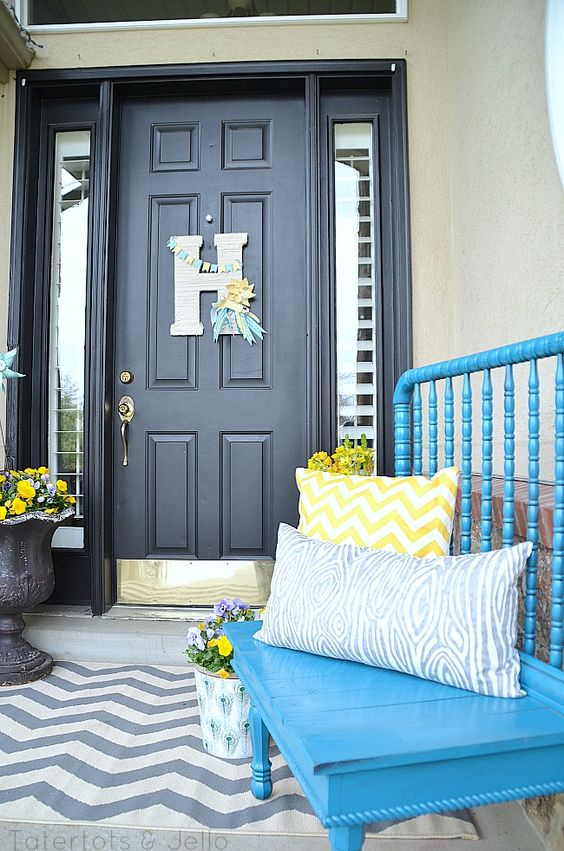
Porches nearly disappeared as an aspect in the home in late 19th century towards the 20th century. When the Tiny home movement began, many Clients, Designers and Architect began evaluating all spaces in the house with a need to downsize. Earlier in 19th century, front and back porches were large bare spaces. They formed a large space at the front of the home and some houses even had verandas. “Verandas” are described as large porches covering the entire facade as well as the sides of the structure. Most of this space was not usable and the design did not accommodate whole year use. Porches were mostly functional in summer and completely unusable in winter. While re-looking the designs of the home in order to downsize, porches were among the first spaces to be cut out. Was this necessary, Yes and No. From a financial perspective, it was necessary to eliminate porches in order to cut-down on cost of construction. In terms of usage, again it was argued that one could not have a space in the house that was used only 30 percent of the year. This said, the verandas were downsized to mere rain porches. Rain porches are ideally small spaces just outside the main entrance door to protect one from rain when stepping in and out of the door. With this ideology, it was designed that if need to sit outside arose, one would purchase outdoor furniture and sit in the lawn. 
This aspect of minimized front porches was maintained until the 21st century when again, need has made designers rethink. Currently in the world right now, cost of land has become very expensive. Therefore, the building spaces have become very small leaving very small gardens or none. The aspect of apartment living has also become common. With this lifestyle, the only outdoor spaces left for one to sit and enjoy the fresh air is in the front or back porches. With this in mind, the porches are being designed as more functional spaces, screened to allow all year round usage and with fireplaces in order to make them more habitable. The use of the front porch has changed from a mere lounge area to sometimes a barbecue area, family outdoor dining area etc.

How can one improve the look of the front porch?

1. Potted Plants
Plants are the best way to bring life to a space whether indoor or outdoor. The plants can be placed in pots or in built-in planters. Potted plants obviously are the easiest to maintain. This is because, they are easy to water and do not accumulate weeds much. From the design selected, pots can bring character to the outdoor area. The colour, style or form completes the design style intended and also improve the look and feel. Potted plants are easy to move around and to reorganize the look of the space. Depending on the size of the pot and the intent, one can decide whether to plant tall, medium or short plants. One can also decide to go with plain green or plants that produce flowers.
2. Door names or numbers
Door numbers are not too common in countries like Kenya. However to add a little charm to the main entry one can install door numbers or family home names. These names can be made from different materials such as wrought iron, drift wood, curved wood, stainless steel etc. Over and above the name, one can bring in a “welcome” sign or decorative writings to add appeal. Farm-house style homes are notoriously known to include sayings or funny message to excite the guests as they come in.
3. Welcome rugs
Welcome rugs are nowadays being made in different materials, colours, shapes, patterns and sizes. Some come plain while others with wordings on them. Welcome rugs were initially designed to be a dust/dirt trapping element. Nowadays, they are used as a decorative/aesthetic element. The main material used to make these rugs is sisal due to its durability properties and ease to clean. Rubber is becoming more common by the day as a material due to its “wash and use” properties. Rug colours may match the door or can completely complement it to bring a contrast. Rectangular shaped rugs are the most common, however, oval and circular rugs are being used more to create character.
4. Door design
The main entrance door sets the design tone of the whole house. More often than not, clients are getting confused on the design of the door to take as it’s intended to have both aesthetic and security properties.  When thinking about both properties, clients end up choosing security over aesthetics due to need and practicality. Did you know you can have both? Doors nowadays are being manufactured with a steel plate inside and timber top. The timber can be plain or with curved out design based on the clients want. The timber can be painted, stained or left natural with linseed oil protective coating.  All said, plain timber doors, timber doors with glass panel designs or timber doors with wrought iron tend to be more aesthetic appealing than plain metal doors.
5. Lighting
Lighting, lighting, lighting! Lighting is the best tool a designer can use to create the perfect ambience at the front porch. Lighting is mostly appreciated when it’s dark. Therefore the light fitting design must also be exquisite in order to create appeal during the day. Chandeliers or pendants were mostly used back in the 19th century. Light fittings have evolved to up lights, staircase side lights, bollards and wall lamps with an up and down lighting capability to improve the ambience. LED warm lights with a yellowish light are a current favorite as they create a good mood when reflecting on any surface. Powder coated black material is also very common nowadays as it’s durable and aesthetically appealing in any environment.
6. Furniture
Furniture forms the function of the front or back porch. To create a relaxing environment where one seeks a quiet moment to be alone or read a book, swing chairs can be used. These are anchored to the soffit slab with adjustable ropes. To create a guest welcome environment, lounge sofas with comfy scatter cushions made of synthetic rattan or timber can be used. Dining environments have also become pretty common with dining tables as a big element. Benches are the best type of chairs for this set-up as they are semi casual and can be dressed with funky cushions to create appeal. Wood, rattan or metal materials can be used to make outdoor furniture. Fabrics used need to be outdoor type with UV protection, waterproof, mold and mildew resistant properties and also soil resistant to be more long lasting. 
Inspiration pour le Journee
Questions previously asked are; with an existing house, can one construct a new front porch? Of course YES! One can build a deck using decking material and steel columns and beams. The cover can be roofing tile, Perspex or even glass depending on one’s budget.

Thinking on improving your front porch? See video below for inspiration.

Tuesday, 13 March 2018

Understanding styles 03) Industrial

Industrial style of design subconsciously started during the industrial revolution. Industrial revolution was a movement from a manual system of operation in the industries to a mechanized one. Earlier before then, industries were big with lots of labourers. Despite this, industries still were not able to give the output required and therefore the need to move to mechanized systems. This revolution began in Great Britain with the textile industries. Other industries such as Iron, glass and cement industries soon picked up.

The Textile industries were very large and due to mechanization, smaller spaces were required.  With time, some industries buildings and warehouses soon became completely vacant.  Some of these buildings were run down while some were still in good condition and needed a bit of reclamation to get back to use. With the cost of construction and rent gone high, Designers and Architects quickly needed to look for solutions to make use of these spaces.  This bore “Conversions” a term used to refer to change in use of a space. Factory, Church, Barn, Tower house and Warehouse conversions have become more common around the world.
 

Industrial style of design looks to preserve the history of a place. It looks to keep elements that have previously been existing, reclaiming them and aesthetically bringing in new modern elements to create a new design. This style can also be adopted in modern spaces to give it the “industrial| look.

a. Style
The Industrial style is Open and Transparent. The warehouse design is generally open and to keep this ideology, this design celebrates large double volume spaces that are interlinked by staircases or walkways. This style promotes exposure of existing elements rather than concealing  which gives you an idea about the history of a building. Large exposed beams and columns can be seen and even the roof cover. The large windows and doors are retained with introduction of standard doors if need be.
 b. Finishes
The finishes are basically natural. Warehouses don’t spend too much on finishes and therefore natural concrete, stonework and metal finishes can be observer. While these finishes may work in terms of design, they sometimes are not practical and therefore, for residential or hospitality spaces, Terrazzo and Epoxy floors can be applied on floor finishes. Matte varnish and linseed oil can also be used on wall and wood finishes to maintain their look but to also provide a protective covering. Steel and wrought iron finishes can be seen on windows, staircases, decks and balustrades.
c. Furniture
Furniture is generally reclaimed or reused from warehouse materials. These materials can be re-used as is or can be broken down and materials used to make new products. Crates, barrels, cylinders etc are items that if used creatively, can be used as seats and tables. Leather and microfiber are also pretty common material for the seats.  When mixed with modern elements, stainless steel can be used on kitchen tops and on loose furniture like tables and headboards.
d. Lighting
Lighting designers have “gone happy” with industrial lighting design. These type of light fittings seem to be the current trend right now. Light fittings have been fully designed as industrial or modern with an industrial feel. LED bulbs with exposed filaments are commonly used with these fittings. The finishes to these fittings can be natural rustic metal, black powder coated or white with clear or brown glass. To some extent, outdoor lamps can be used and still look in place. 
e. Colour scheme
The general colour schemes are natural brown or red brick colours with a mix of black. For lovers of grey tones, natural grey concrete look with blue stone work form the base to this scheme. Black brown or maroon colours are used on the upholstered furniture. When mixed with modern elements, black white or grey elements are used.  Colour schemes can also be determined by  the dominant wood colour.
Inspiration pour la Journee.
Designer Tamara Robbins Griffith summarises on the decor that can be used in this type of design. Check video below for inspiration.

Monday, 5 March 2018

Fabric and its application.


Fabrics comprise of a large part of any space in the home. They are largely used to bring out the aesthetic and decorative part of design and therefore refered to as “softs”. Fabric manufacturing is a trade that began in 34,000 BCE where fabrics were made from dyed flax fibres. This trade has then developed throughout the years. Development of modern manufacturing techniques has made the trade develop into a largescale trade.
There are different methods used in manufacturing fabrics ; Weaving, Knitting, Looping, crocheting, Spread Tow, braiding, Interlocking, Interlacing and Felting. These methods contribute to the properties and use of the fabric. Fabrics are mainly classified by type, usage and properties.
There are 3 main sources of fabric:
  1. Animal
These fabrics are made from animal hair, fur, skin and products. Such fabrics include wool, fur, cashmere and silk.
  1. Plant
Fabrics produced from plant product are such as Sisal, Cotton, Coir, straw, bamboo, hemp and flax. Due to the properties of these fabrics , some are not largely used.
  1. Mineral
Asbestos, basalt and glass fibre are some of fabrics produced from minerals. These fabrics are mainly made for specialty purposes. Glass fibre is for example is used for manufacture of fire retardant fabric, protective clothing, sound proof, fireproof ans insulating fabric. 
  1. Synthetic
Synthetic textiles are the most common type of fabric as they are considered to be renewable . These type of fabrics can be used alone or can be used in stregthening the natural fabrics. Synthetic fabrics are such as Polyester, Acrylic, Nylon, Spandex, Aramid,Olefin, Ingeo, Lurex, Milk and carbon fibre.  

Different fabrics have different uses.
  1. Cotton
Cotton is a natural plant fabric manufactured  from cotton balls largely grown in tropical and sub-tropical areas such as America, Africa and India.  Cotton in its natural form is extremely versatile and has high breath-ability. Cotton fibres are one of the strongest among natural fibres second to Wool.One of its properties which is an advantage and a disadvantage is  It dyes easily. This therefore makes it easy to develop patterns on. However, it also stains easily with natural stains. Cotton also creases easily. One of the major use of cotton is in making bedding ; sheets and pillowcases and sofa slip covers . When mixed with synthetic fibres, cotton can be used to make drapery fabric.

  1. Wool
Wool is by far the strongest natural fibre made from animal hair. This makes it easy to withstand wear and tear and therefore maintain its “new look” for a long period of time. It is also soft and durable. Wool is flexible, water , sound and fire resistant .  Its ability to withstand wear and tear make it be used in making rugs and carpets. Its durability enables it be used in making fabric for upholstery for both residential and commercial uses. As is fire resistant, wool is largely used in manufacture of fire fighting garments and also for outerwear for insulation from cold. In its natural form, wool is used in manufacture of felts that are highly used in sound proofing.

  1. Silk
Silk is a natural animal fiber made from fibroin, a fibre produced by silk worms. Silk is an expensive fabric that is associated luxury. It has a natural luster giving it a sheen. It is also long lasting when maintained and can last for hundreds of years. These properties makes it be used to make cushions, drapery, and bedding. Many of the finest oriental rugs are made from silk . Years back, silk like pearls was used as a symbol of  wealth and would be passed down from generation to generation. One of the downsides of silk is that it forms sun rot when exposed to direct sunlight and also fades over time.

  1. Polyester
Polyester is a synthetic fabric highly used in blending natural fabrics. Polyester in its natural form is resistant to dyes. In fact, the only dye that can alter the colour of polyester is disperse dyes. Its used in making blankets, comforters and upholstery padding. When blended with cotton, polyester makes the fabric strong, wrinkle and tear resistant and reduces shrinking. This blended fabric can be used to  make a variety of household items such as bedding, drapery , cushions and also for upholstery.

  1. Leather
I would not close this advice without looking at leather. Naturally, leather is looked at as a luxurious fabric used in high end projects. It is also considered to be easy to take care of. Unlike what people think, leather is a very difficult fabric to take care of. It scratches easily, is affected by water and gets destroyed when placed under direct sunlight. However, leather has high tensile strength, high resistance to flexing and good heat insulation properties. This properties contribute to its sole use as an upholstery fabric.
Inspiration pour la Journee.
Anne-Marie Barton takes us through fabric matters as she gives us a tour around her house. Check out the video below for inspiration.

 Ever wondered how to select the perfect upholstery fabric? Kate Davidson gives us advice on this on How-to and style . 

Sunday, 25 February 2018

Selecting sanitary ware

For a very long period of time, sanitary ware was not considered as elements that could affect the design and function of a home. People purchased sanitary ware based on how much they cost; the cheaper the better. Most people went for standard elements, how they looked did not matter. During a remodel, most people ask the contractor to supply and install what he feels could work. This may be a quicker option however, it is very important for one to procure this components themselves. Luckily, there are very many brands and suppliers of sanitary ware in most parts of the world and hence this has become easier. These brands have different characteristics which may or may not work for everyone.  Therefore, there is a need to meet the supplier and discuss the different fittings based on what one would like for their home.
What should one look out for when selecting sanitary ware?
Most people would pick “How it looks” as the most important element. However, there are other factors that one should consider.
  1. Conditions of the environment and Water consumption
  2. Available space
  3. Functionality and the User
  4.  Design
  5. Authenticity and Warranties
1. Conditions of the environment and Water consumption
This is by far the most important characteristic to look out for when selecting sanitary ware. The general site condition is important because manufacturers have researched on different factors affecting the life of sanitary ware and have come up with products that counter these problems. For example, salinity of water in some environments. Water with high concentration of salts causes discoloration of the faucets with a greenish blue element and eventually crumble away. Copper fittings are the least resistant in saline environments. Plastic in this environment works best as it is easy to clean with homemade detergent without damaging the fittings.  It is also important to check water pressure before purchasing faucets and showerheads. This is because, some of these fittings require high pressure to function. Some of the fittings are however manufactured with this in mind and therefore have internal pressure building capacity to give one a calm and relaxing bath.  With sustainability in mind, most sanitary ware are manufactured with water and energy saving capabilities, however it is important to consult the supplier. For arid and semi-arid areas with low volumes of water, it is important to consider water saving features.
2. Available space
More space, more comfort.
Nowadays, space has become very expensive, whether it to rent or build. People have resulted in living in tiny homes or taking measures that can help save on space to reduce the general area. This has therefore led to reduction of bathroom space. This should not be a problem though because, manufacturers have come up with different designs and sizes of sanitary ware that can fit in very small spaces. Wash hand basins as small as 400mmx225mm have been manufactured. This is same for WCs and shower cubicles. Before purchase, one should measure the size of the bathroom and consult with the supplier on space efficient sanitary ware that should be installed to still maintain accessibility within the bathroom.
3. Functionality and User
Mixers may have been the greatest invention in the history of faucets. Back when water heaters did not exist, taking a shower was a task. When water heaters were invented, they made life easier, however controlling the temperature of water became a task. Manual mixers provided an easy way to control how much hot water one needed to add to provide the perfect shower experience. With technology nowadays, manufacturers have invented thermostatic mixers where one can digitally set the temperature of water for up to 5 members and digitize so that when one gets into the shower, setting the temperature of water will be just with one click. Manufactures have also become sensitive of the fact that some of these items are to be used by children and the aged therefore making it very easy to use.
4. Design
This is the best part of sanitary ware selection. When researching on the sanitary items you should purchase, one needs to check the style of their home and procure something that fits in this style. Manufacturers have become cognizant of the fact that designers are going a step ahead to design homes within different styles in bid to satisfy the clients need. This includes selecting light fittings and sanitary ware that fits best in the style. With this in mind, manufactures have provided different ranges to select from.  Collections such as Cape Cod, Bloomsbury, Retro nouveau etc. have a complete range that includes a WC, bidet, urinal, wash hand basin and bath tub that match and that afford the desired fit.
5. Authenticity and Warranties
Sanitary ware can be expensive. That said, one needs to consider authenticity of the items one intends to procure. Certain manufacturers such as Duravit, Bagnodesign, Hansgrohe, Keramag, Grohe, Kholer etc. have been in production for a long period of time and therefore their products have been time tested. That does not mean that one should not procure any other brands. However before doing so, one should check with the suppliers on authenticity of the brand and if warranties are given on purchase. This is important because one can make a lot of saving if a product is not visibly faulty at procurement and break down after installation.
Inspiration pour la Journee.
Home remodels are interesting projects to undertake as a person or as a family. How to remodel your bathroom  is an interesting article with a guide on bathroom remodels. Below is a link with an inspirational video on a DIY bathroom remodel. 

Monday, 12 February 2018

Designing for Pets.

Pets are considered as the perfect companion, well that is other than the significant other and the kids. People love pets because they bring life to a home. From dogs, to cats to other various animals, pets are considered as members of the family. Most times, people acquire pets for companionship, however sometimes, pets are recommended by healthcare specialists for disability assistance or to help with psychological issues. Different theories have been published on pets and emotional well being, some of which are contradicting. All in all, pets trigger ones emotions; the need to provide love and care for another. Different pets have different needs and therefore when designing homes for people with pets, it is necessary to provide comfortable places for them in the home. Pets are like young kids in some ways; they need special design elements for their comfort and for the owner’s ease in taking care of them.

FLOOR AND WALL FINISHES
Homes with pets require a lot of cleaning and tidying up. Pets do not care for their surrounding neither, do they help with the cleaning up after. Some are purely indoor pets, however others love spending time outdoors enjoying the sun and fresh air. With this in mind, one needs to consider floor and wall finishes that are easy to clean, do not show dust easily, do not scratch/chip when furniture is moved around and that do not damage easily with water. Marble and porcelain floors are highly advised as they come in very many finishes that can easily match any style of the home and are relatively easy to clean. Precast concrete floor finish has newly been adopted as an internal floor finish and is mostly implemented in industrial designs. However, lately this finish is being significantly used in contemporary and urban designs. These finishes however are cold. Therefore, one needs to provide rugs and cushions that are comfortable for the pet to sleep on.

LAYOUT/ ACCESS
Pets love free open spaces that they can effortlessly run around and play. When designing for pets, one needs to first think about access in and out of the home. Pet doors are quite common in the US and Europe, however in some areas, this is considered unsafe. Large corridors would be good for the big sized pets such and the greyhound dogs. Open plan house layouts are good because pets love companionship and therefore prefer to be in the same room as the owner at all times. Access in and out of different spaces needs to be thought about as pets do not stay in one place.  Pets need to have a consistent feeding, bathing and pooping area. This way it is easy to train them to use these facilities. It also makes it easy to clean the home. The laundry room in my opinion is the best place for this. This is because, one can custom make a shower tray for bathing and due to availability of water around, one can easy clean any spilled food and water.

FURNITURE/FABRICS
Pets should have designated furniture in the home. Bean bags, beds and seats are quite common and can be bought in furniture shops or can easily be made as DIY items by crafty people. Pets ordinarily use furniture around the house such as couches, ottomans and even beds before training. Therefore, one needs consider using fabrics that are water/stain resistant, easy to clean, mold and mildew resistant, soil resistant and one that does not collect fur. The fabrics if washable also need to be those that have double rub counts and are not affected by detergent due to the heavy cleaning.  This way, one does not have to make covers for all the furniture and is easy to tidy up the home.

Inspiration pour la Journee.
Do you have a fury friend at home and have wondered how to accommodate them? Check out the video below for inspiration.

Pet Products

Tuesday, 6 February 2018

Sustainability in Interior design

Sustainability is a priciple that has been adopted in Interior Design and Architecture This is due to the need to consider the impact of design to the environment. We are living in an era where Green design should be a consideration when coming up with any invention. All disciplines such as IT, Manufacturing, Construction etc are slowly adopting this principle to help save the planet. As "Green design is responsible design". Great Interior design is not only how it looks but also how it affects the surrounding. There are many priciples that can be adopted when designing for sustainability:


1. Longevity and Flexibility

How will the “now”design be used in the future?

When coming up with a design, one needs to think about the longevity of the concept and materials to be used. It is crucial for one to think about how the design works presently and if it can still work in the future for the same user. People and environments are consistently changing and therefore, one needs to consider how the design will adjust with this change. This thinking has led to invention of Modular systems that can fit in different types of settings. Materials used also needs to be durable to give close to a lifetime of service.


2. Energy efficiency.

When developing a design concept, one needs to think about the energy efficiency of each product mostly in its "afterlife". This is ideally its life while "In Use". Product designers have developed methods to reduce energy consumption while manufacturing design products. In the same breath, designers ought to think of ways to reduce energy consumption while designing spaces. Other than use of sustainable materials, one can consider heat retention solutions such as installation of insulation films on windows, use of fabrics that a can retain warmth and also use of floor/ wall finishes that are thermal insulators such as Laminates. 


 3.Low environmental impact

All materials have a life cycle i.e production till disposal. When selecting materials,one should think about this entire cycle.One should keenly check its source of raw, manufacturing process , transportation and installation of the product and also its method of disposal once its use has been exhausted. This then will help guide one in choosing materials that are renewable and do not have a negative effect to the environment.


 4. Waste reduction

The world is moving towards a "Zero waste" life. This way of life is becoming more popular by the day due to the effect waste has had on the enviromnent both ecologically and healthwise. With this in mind,one needs to develop a Recycle, Repurpose or Upcycle approach when designing a space. At the point of design, one needs relook the existing elements and see how they can be reused. Disposal should be the last resort. This will reduce the need for new elements and in turn help reduce depletion of natural rescources. 

 5. Design for simple living/minimalism  

Design needs not to be complex.The need for simple living has influenced people to begin adopting the “Tiny living concept”.A few years ago, there was a thinking that the bigger the space, the more complex the design and the more items incorporated, the more comfort and the aesthetics the space willl have. This over the recent past has been proven wrong. People need to change their mindset from the need to have big spaces to maximizing the use of the smaller spaces inorder to acieve the desired goal. This can be done by having simpler elements that have more funcion than one.


6. Healthy environments

When designing a healthy enviroment, one needs to consider the ventilation, acoustics, lighting, heating and the quality of air. These elements directly affect the health of the user. Architects generally consider these however, the designer needs to check and provide where need be. Natural solutions should be sought before settling for  mechanical aspects. Large windows with permanent ventilation should be considered to allow for light and free flow of air. Indoor plants should also be considered as they are a natural air purification solution.


7. Space efficiency

Good design is one that takes into account efficiency in use of the space. Open spaces provide better circulation. When coming up with a design, one needs to consider the circulation and how easily all functions are accessed and used. One also needs to consider how efficient all functions are  to prevent over or under provision.  


Inspiration pour la journee
Check out the video below from House and home on Ecofriendly design.

Tuesday, 30 January 2018

2017 Colour Trend Wins

Paint colours are the most picked up and implemented trends throughout in Interior Design. From 1860s, different schemes have been adopted throughout the decade’s most running across 10 years. However from the year 2000, a regular change can be observed every year. These colours are influenced by fields such as photography, graphic and fashion design. 2017 was an experimental year with deeper colours being adopted as the main colours. Designers have moved from the greys, beige and “Greige” and have picked up dark orchid, teal and sea grass tones.
Colour psychologists have come up with theories about colour and how it influences the human senses.  Green colour for example represents freshness and balance. It alludes to wealth and growth. Blue colour represents loyalty and calmness and alludes to dependability. Purple colour represents creativity and royalty. It evokes serenity and artistry.

Other design elements implemented in smaller scales are fabric type and patterns, metals, wood tones and stone finishes.

1. SHERYN WILLIAMS ;  COLOUR OF THE YEAR – POISED TAUPE
Poised Taupe is a neutral colour with a very earthy base. It’s an effortless mix of brown and grey which makes it easy to pair. This colour is timeless and fits in both classic and modern templates. Due to its base colours, Poised taupe can be paired with a very wide variety of colours such and deep blues, purple and burgundy. Used sparingly, mustard can also pair well with taupe. For lovers of neutral schemes, off whites with cream bases will give that elegant look.


3. DULUX ;  COLOUR OF THE YEAR – DENIM DRIFT
Denim drift seems to be the colour that was adversely used in 2017.  However, the darker shade of it;  Midnight show has become more popular.  This colour works well with neutral, wood and natural stone look in bathrooms. When used with white doors and architraves, cornices and also skirtings, this colour stand out. Midnight snow can be used on kitchen cabinetry, internal and external doors and also externally at the entry porch.
 

3. BEHR ;  COLOUR OF THE YEAR – GREEN AGATE
This colour has mostly been used in Kitchen cabinetry. In a two toned kitchen, the upper cabinets can be left as white or off white while the lower cabinets as Green agate. Designers have got even more creative and used gold and brass accessories as accents. Green being a colour that aludes to freshness,  this colour has been used in bedrooms and lounge areas as the main colour.

Inspiration pour la journee
Below is a video to inspire you on other 2017 design trends as per House and Home .Also check out other articles  published by Elle Decor and House Beautiful .

Monday, 15 January 2018

New beginnings 2. Planning a redecoration

What is the difference between redesign and redecoration?
Clients have asked me this lot of times before as it is not really clear to them the difference between design and decoration.  The scope of redesign includes builders works such as demolitions and construction. It is also inclusive of any new electrical, Mechanical and plumbing works such as new wiring, drainage pipe work etc. Redesign requires and Interior designer as the main consultant and based on the extent of the new work, consultation from Mechanical, electrical and structural engineers may be required. Redecoration on the other hand is purely the change of aesthetic elements in the house such as finishes (Floor, wall and ceiling), electrical and mechanical fittings/ accessories and change/refurbishment of furniture. In redecoration, there is no builders work involved and therefore, only services of an Interior designer or Interior decorator are involved. 
How should one plan for a redecoration?
There are three main things one should do before embarking on a redecoration.

  1.   Research and establish a style
  2.  Prepare a moodboard
  3.  Prepare a schedule


1)      Research and establish a style
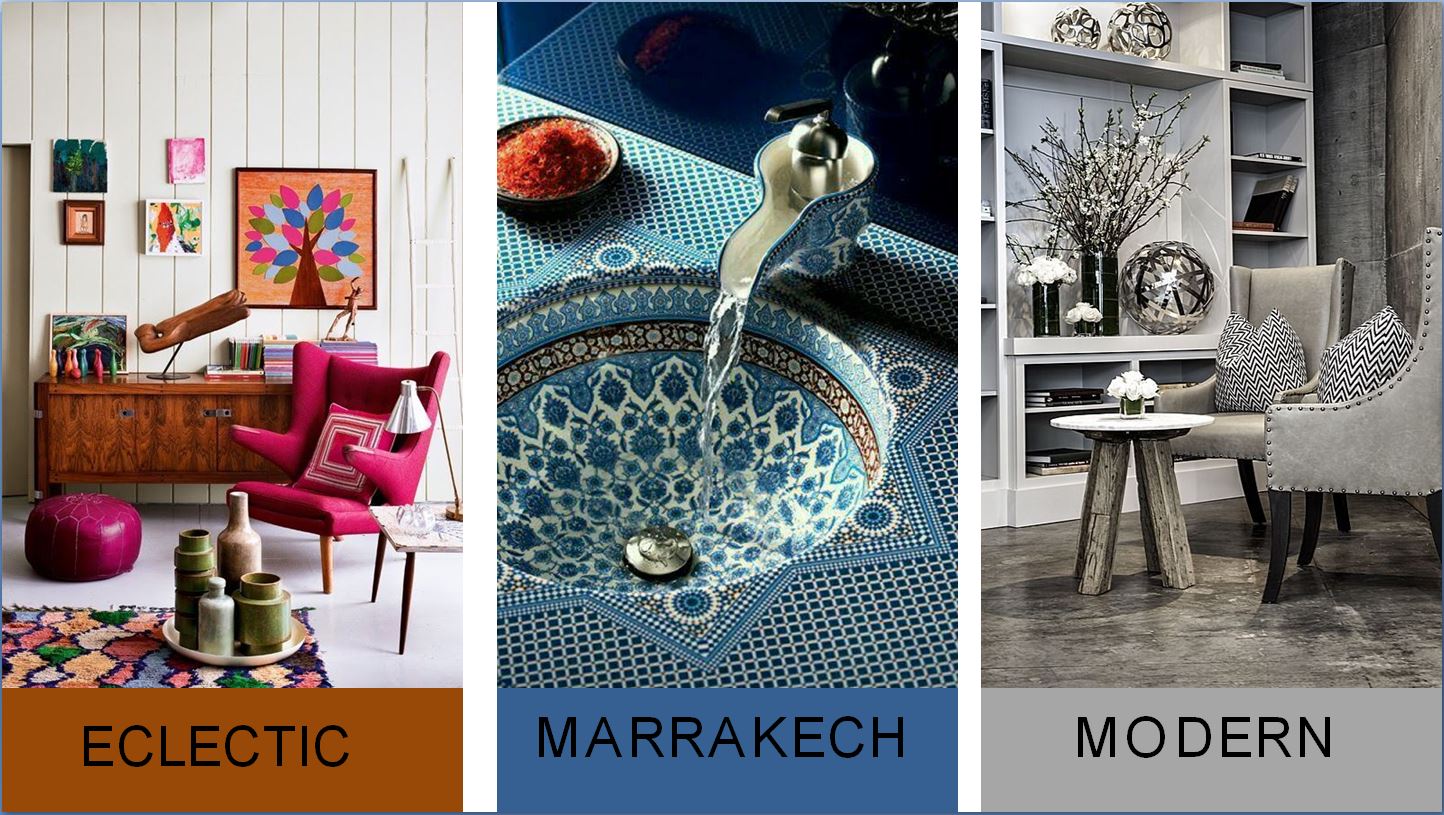
There are very many different types of styles one can adopt in Interior design. Each style has its own properties and characteristics. The difference between the styles mostly falls in the colour palette, types of fabrics, pattern and prints, furniture styles, lighting and sanitary elements and accessories, rugs type and pattern styles and sometimes furniture arrangement. Lots of these styles have been outlined in https://www.houzz.com/ a really good source for design inspiration and in other platforms on the internet. However, these are not all styles available. Styles such as Minimalist, Japandi, Bohemian, Traditional African, African chic, Swahili , Marrakech, Nautical, etc have not been captured on Houzz but have been captured on other platforms online.  Before one begins a redecoration, one needs to research and establish the type of style they would like to adopt and also the elements they need to incorporate to achieve this style. 

2)      Prepare a moodboard
Mood boards can be physical or digital. In this day and era, digital mood boards are the best as one can be able to add or delete elements easily from the page. There are many software’s one can use to create this. However, the easiest software is Microsoft PowerPoint. PowerPoint is easy to use and is easy to add images and texts. Mood boards help one visualize the room with all elements on one page including fabrics and colour palette. If for example one has come across a beautiful sofa in the showroom or in a magazine, one should take a photo and paste it in the mood board. Many shops now have also digitized their products and one can get clear photos on their websites.

3)      Prepare a schedule
Schedule preparation is the most exhausting part of the process as one is required to accurately put in the Description, Source, Dimensions, Quantity, Cost per item and the total cost. An image is also required for easy identification. This needs to be accurate as possible because it helps one generate a preliminary budget.  Quantities of items such as drapery may be a bit difficult to calculate and therefore one can use fabric calculator for this. Once this is complete, one can then approach the different suppliers and request for a quotation of the actual items. It is necessary to ask the supplier to include taxes, lead time, extra charges such as transport, payment terms, validity period of that quotation and of course the discount. 

Want inspiration on redecorating your home?


Follow Design cafe on Instagram
Keep reading to get information on the different styles of design. We have published Victorian Style and  Traditional Style