Sunday, 25 February 2018

Selecting sanitary ware

For a very long period of time, sanitary ware was not considered as elements that could affect the design and function of a home. People purchased sanitary ware based on how much they cost; the cheaper the better. Most people went for standard elements, how they looked did not matter. During a remodel, most people ask the contractor to supply and install what he feels could work. This may be a quicker option however, it is very important for one to procure this components themselves. Luckily, there are very many brands and suppliers of sanitary ware in most parts of the world and hence this has become easier. These brands have different characteristics which may or may not work for everyone.  Therefore, there is a need to meet the supplier and discuss the different fittings based on what one would like for their home.
What should one look out for when selecting sanitary ware?
Most people would pick “How it looks” as the most important element. However, there are other factors that one should consider.
  1. Conditions of the environment and Water consumption
  2. Available space
  3. Functionality and the User
  4.  Design
  5. Authenticity and Warranties
1. Conditions of the environment and Water consumption
This is by far the most important characteristic to look out for when selecting sanitary ware. The general site condition is important because manufacturers have researched on different factors affecting the life of sanitary ware and have come up with products that counter these problems. For example, salinity of water in some environments. Water with high concentration of salts causes discoloration of the faucets with a greenish blue element and eventually crumble away. Copper fittings are the least resistant in saline environments. Plastic in this environment works best as it is easy to clean with homemade detergent without damaging the fittings.  It is also important to check water pressure before purchasing faucets and showerheads. This is because, some of these fittings require high pressure to function. Some of the fittings are however manufactured with this in mind and therefore have internal pressure building capacity to give one a calm and relaxing bath.  With sustainability in mind, most sanitary ware are manufactured with water and energy saving capabilities, however it is important to consult the supplier. For arid and semi-arid areas with low volumes of water, it is important to consider water saving features.
2. Available space
More space, more comfort.
Nowadays, space has become very expensive, whether it to rent or build. People have resulted in living in tiny homes or taking measures that can help save on space to reduce the general area. This has therefore led to reduction of bathroom space. This should not be a problem though because, manufacturers have come up with different designs and sizes of sanitary ware that can fit in very small spaces. Wash hand basins as small as 400mmx225mm have been manufactured. This is same for WCs and shower cubicles. Before purchase, one should measure the size of the bathroom and consult with the supplier on space efficient sanitary ware that should be installed to still maintain accessibility within the bathroom.
3. Functionality and User
Mixers may have been the greatest invention in the history of faucets. Back when water heaters did not exist, taking a shower was a task. When water heaters were invented, they made life easier, however controlling the temperature of water became a task. Manual mixers provided an easy way to control how much hot water one needed to add to provide the perfect shower experience. With technology nowadays, manufacturers have invented thermostatic mixers where one can digitally set the temperature of water for up to 5 members and digitize so that when one gets into the shower, setting the temperature of water will be just with one click. Manufactures have also become sensitive of the fact that some of these items are to be used by children and the aged therefore making it very easy to use.
4. Design
This is the best part of sanitary ware selection. When researching on the sanitary items you should purchase, one needs to check the style of their home and procure something that fits in this style. Manufacturers have become cognizant of the fact that designers are going a step ahead to design homes within different styles in bid to satisfy the clients need. This includes selecting light fittings and sanitary ware that fits best in the style. With this in mind, manufactures have provided different ranges to select from.  Collections such as Cape Cod, Bloomsbury, Retro nouveau etc. have a complete range that includes a WC, bidet, urinal, wash hand basin and bath tub that match and that afford the desired fit.
5. Authenticity and Warranties
Sanitary ware can be expensive. That said, one needs to consider authenticity of the items one intends to procure. Certain manufacturers such as Duravit, Bagnodesign, Hansgrohe, Keramag, Grohe, Kholer etc. have been in production for a long period of time and therefore their products have been time tested. That does not mean that one should not procure any other brands. However before doing so, one should check with the suppliers on authenticity of the brand and if warranties are given on purchase. This is important because one can make a lot of saving if a product is not visibly faulty at procurement and break down after installation.
Inspiration pour la Journee.
Home remodels are interesting projects to undertake as a person or as a family. How to remodel your bathroom  is an interesting article with a guide on bathroom remodels. Below is a link with an inspirational video on a DIY bathroom remodel. 

Monday, 12 February 2018

Designing for Pets.

Pets are considered as the perfect companion, well that is other than the significant other and the kids. People love pets because they bring life to a home. From dogs, to cats to other various animals, pets are considered as members of the family. Most times, people acquire pets for companionship, however sometimes, pets are recommended by healthcare specialists for disability assistance or to help with psychological issues. Different theories have been published on pets and emotional well being, some of which are contradicting. All in all, pets trigger ones emotions; the need to provide love and care for another. Different pets have different needs and therefore when designing homes for people with pets, it is necessary to provide comfortable places for them in the home. Pets are like young kids in some ways; they need special design elements for their comfort and for the owner’s ease in taking care of them.

FLOOR AND WALL FINISHES
Homes with pets require a lot of cleaning and tidying up. Pets do not care for their surrounding neither, do they help with the cleaning up after. Some are purely indoor pets, however others love spending time outdoors enjoying the sun and fresh air. With this in mind, one needs to consider floor and wall finishes that are easy to clean, do not show dust easily, do not scratch/chip when furniture is moved around and that do not damage easily with water. Marble and porcelain floors are highly advised as they come in very many finishes that can easily match any style of the home and are relatively easy to clean. Precast concrete floor finish has newly been adopted as an internal floor finish and is mostly implemented in industrial designs. However, lately this finish is being significantly used in contemporary and urban designs. These finishes however are cold. Therefore, one needs to provide rugs and cushions that are comfortable for the pet to sleep on.

LAYOUT/ ACCESS
Pets love free open spaces that they can effortlessly run around and play. When designing for pets, one needs to first think about access in and out of the home. Pet doors are quite common in the US and Europe, however in some areas, this is considered unsafe. Large corridors would be good for the big sized pets such and the greyhound dogs. Open plan house layouts are good because pets love companionship and therefore prefer to be in the same room as the owner at all times. Access in and out of different spaces needs to be thought about as pets do not stay in one place.  Pets need to have a consistent feeding, bathing and pooping area. This way it is easy to train them to use these facilities. It also makes it easy to clean the home. The laundry room in my opinion is the best place for this. This is because, one can custom make a shower tray for bathing and due to availability of water around, one can easy clean any spilled food and water.

FURNITURE/FABRICS
Pets should have designated furniture in the home. Bean bags, beds and seats are quite common and can be bought in furniture shops or can easily be made as DIY items by crafty people. Pets ordinarily use furniture around the house such as couches, ottomans and even beds before training. Therefore, one needs consider using fabrics that are water/stain resistant, easy to clean, mold and mildew resistant, soil resistant and one that does not collect fur. The fabrics if washable also need to be those that have double rub counts and are not affected by detergent due to the heavy cleaning.  This way, one does not have to make covers for all the furniture and is easy to tidy up the home.

Inspiration pour la Journee.
Do you have a fury friend at home and have wondered how to accommodate them? Check out the video below for inspiration.

Pet Products

Tuesday, 6 February 2018

Sustainability in Interior design

Sustainability is a priciple that has been adopted in Interior Design and Architecture This is due to the need to consider the impact of design to the environment. We are living in an era where Green design should be a consideration when coming up with any invention. All disciplines such as IT, Manufacturing, Construction etc are slowly adopting this principle to help save the planet. As "Green design is responsible design". Great Interior design is not only how it looks but also how it affects the surrounding. There are many priciples that can be adopted when designing for sustainability:


1. Longevity and Flexibility

How will the “now”design be used in the future?

When coming up with a design, one needs to think about the longevity of the concept and materials to be used. It is crucial for one to think about how the design works presently and if it can still work in the future for the same user. People and environments are consistently changing and therefore, one needs to consider how the design will adjust with this change. This thinking has led to invention of Modular systems that can fit in different types of settings. Materials used also needs to be durable to give close to a lifetime of service.


2. Energy efficiency.

When developing a design concept, one needs to think about the energy efficiency of each product mostly in its "afterlife". This is ideally its life while "In Use". Product designers have developed methods to reduce energy consumption while manufacturing design products. In the same breath, designers ought to think of ways to reduce energy consumption while designing spaces. Other than use of sustainable materials, one can consider heat retention solutions such as installation of insulation films on windows, use of fabrics that a can retain warmth and also use of floor/ wall finishes that are thermal insulators such as Laminates. 


 3.Low environmental impact

All materials have a life cycle i.e production till disposal. When selecting materials,one should think about this entire cycle.One should keenly check its source of raw, manufacturing process , transportation and installation of the product and also its method of disposal once its use has been exhausted. This then will help guide one in choosing materials that are renewable and do not have a negative effect to the environment.


 4. Waste reduction

The world is moving towards a "Zero waste" life. This way of life is becoming more popular by the day due to the effect waste has had on the enviromnent both ecologically and healthwise. With this in mind,one needs to develop a Recycle, Repurpose or Upcycle approach when designing a space. At the point of design, one needs relook the existing elements and see how they can be reused. Disposal should be the last resort. This will reduce the need for new elements and in turn help reduce depletion of natural rescources. 

 5. Design for simple living/minimalism  

Design needs not to be complex.The need for simple living has influenced people to begin adopting the “Tiny living concept”.A few years ago, there was a thinking that the bigger the space, the more complex the design and the more items incorporated, the more comfort and the aesthetics the space willl have. This over the recent past has been proven wrong. People need to change their mindset from the need to have big spaces to maximizing the use of the smaller spaces inorder to acieve the desired goal. This can be done by having simpler elements that have more funcion than one.


6. Healthy environments

When designing a healthy enviroment, one needs to consider the ventilation, acoustics, lighting, heating and the quality of air. These elements directly affect the health of the user. Architects generally consider these however, the designer needs to check and provide where need be. Natural solutions should be sought before settling for  mechanical aspects. Large windows with permanent ventilation should be considered to allow for light and free flow of air. Indoor plants should also be considered as they are a natural air purification solution.


7. Space efficiency

Good design is one that takes into account efficiency in use of the space. Open spaces provide better circulation. When coming up with a design, one needs to consider the circulation and how easily all functions are accessed and used. One also needs to consider how efficient all functions are  to prevent over or under provision.  


Inspiration pour la journee
Check out the video below from House and home on Ecofriendly design.

Tuesday, 30 January 2018

2017 Colour Trend Wins

Paint colours are the most picked up and implemented trends throughout in Interior Design. From 1860s, different schemes have been adopted throughout the decade’s most running across 10 years. However from the year 2000, a regular change can be observed every year. These colours are influenced by fields such as photography, graphic and fashion design. 2017 was an experimental year with deeper colours being adopted as the main colours. Designers have moved from the greys, beige and “Greige” and have picked up dark orchid, teal and sea grass tones.
Colour psychologists have come up with theories about colour and how it influences the human senses.  Green colour for example represents freshness and balance. It alludes to wealth and growth. Blue colour represents loyalty and calmness and alludes to dependability. Purple colour represents creativity and royalty. It evokes serenity and artistry.

Other design elements implemented in smaller scales are fabric type and patterns, metals, wood tones and stone finishes.

1. SHERYN WILLIAMS ;  COLOUR OF THE YEAR – POISED TAUPE
Poised Taupe is a neutral colour with a very earthy base. It’s an effortless mix of brown and grey which makes it easy to pair. This colour is timeless and fits in both classic and modern templates. Due to its base colours, Poised taupe can be paired with a very wide variety of colours such and deep blues, purple and burgundy. Used sparingly, mustard can also pair well with taupe. For lovers of neutral schemes, off whites with cream bases will give that elegant look.


3. DULUX ;  COLOUR OF THE YEAR – DENIM DRIFT
Denim drift seems to be the colour that was adversely used in 2017.  However, the darker shade of it;  Midnight show has become more popular.  This colour works well with neutral, wood and natural stone look in bathrooms. When used with white doors and architraves, cornices and also skirtings, this colour stand out. Midnight snow can be used on kitchen cabinetry, internal and external doors and also externally at the entry porch.
 

3. BEHR ;  COLOUR OF THE YEAR – GREEN AGATE
This colour has mostly been used in Kitchen cabinetry. In a two toned kitchen, the upper cabinets can be left as white or off white while the lower cabinets as Green agate. Designers have got even more creative and used gold and brass accessories as accents. Green being a colour that aludes to freshness,  this colour has been used in bedrooms and lounge areas as the main colour.

Inspiration pour la journee
Below is a video to inspire you on other 2017 design trends as per House and Home .Also check out other articles  published by Elle Decor and House Beautiful .

Monday, 15 January 2018

New beginnings 2. Planning a redecoration

What is the difference between redesign and redecoration?
Clients have asked me this lot of times before as it is not really clear to them the difference between design and decoration.  The scope of redesign includes builders works such as demolitions and construction. It is also inclusive of any new electrical, Mechanical and plumbing works such as new wiring, drainage pipe work etc. Redesign requires and Interior designer as the main consultant and based on the extent of the new work, consultation from Mechanical, electrical and structural engineers may be required. Redecoration on the other hand is purely the change of aesthetic elements in the house such as finishes (Floor, wall and ceiling), electrical and mechanical fittings/ accessories and change/refurbishment of furniture. In redecoration, there is no builders work involved and therefore, only services of an Interior designer or Interior decorator are involved. 
How should one plan for a redecoration?
There are three main things one should do before embarking on a redecoration.

  1.   Research and establish a style
  2.  Prepare a moodboard
  3.  Prepare a schedule


1)      Research and establish a style
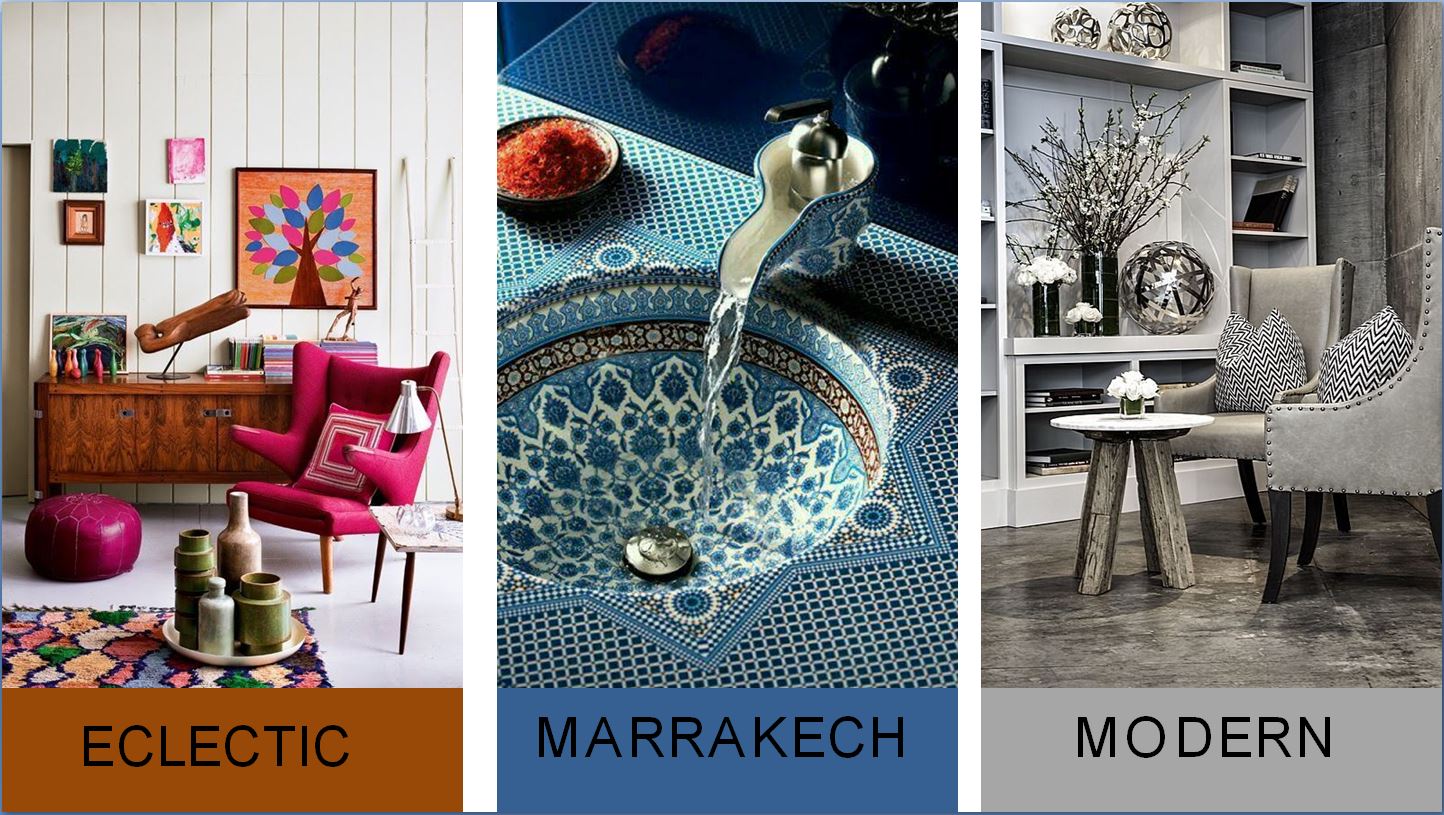
There are very many different types of styles one can adopt in Interior design. Each style has its own properties and characteristics. The difference between the styles mostly falls in the colour palette, types of fabrics, pattern and prints, furniture styles, lighting and sanitary elements and accessories, rugs type and pattern styles and sometimes furniture arrangement. Lots of these styles have been outlined in https://www.houzz.com/ a really good source for design inspiration and in other platforms on the internet. However, these are not all styles available. Styles such as Minimalist, Japandi, Bohemian, Traditional African, African chic, Swahili , Marrakech, Nautical, etc have not been captured on Houzz but have been captured on other platforms online.  Before one begins a redecoration, one needs to research and establish the type of style they would like to adopt and also the elements they need to incorporate to achieve this style. 

2)      Prepare a moodboard
Mood boards can be physical or digital. In this day and era, digital mood boards are the best as one can be able to add or delete elements easily from the page. There are many software’s one can use to create this. However, the easiest software is Microsoft PowerPoint. PowerPoint is easy to use and is easy to add images and texts. Mood boards help one visualize the room with all elements on one page including fabrics and colour palette. If for example one has come across a beautiful sofa in the showroom or in a magazine, one should take a photo and paste it in the mood board. Many shops now have also digitized their products and one can get clear photos on their websites.

3)      Prepare a schedule
Schedule preparation is the most exhausting part of the process as one is required to accurately put in the Description, Source, Dimensions, Quantity, Cost per item and the total cost. An image is also required for easy identification. This needs to be accurate as possible because it helps one generate a preliminary budget.  Quantities of items such as drapery may be a bit difficult to calculate and therefore one can use fabric calculator for this. Once this is complete, one can then approach the different suppliers and request for a quotation of the actual items. It is necessary to ask the supplier to include taxes, lead time, extra charges such as transport, payment terms, validity period of that quotation and of course the discount. 

Want inspiration on redecorating your home?


Follow Design cafe on Instagram
Keep reading to get information on the different styles of design. We have published Victorian Style and  Traditional Style

Monday, 8 January 2018

New Beginnings 1. Planning a remodel

The beginning of a new year is always very exciting. It’s a time when people think about all the possibilities with the fresh new start. People get an opportunity to plan for the new year.  A home is a very important element in everyone’s life. Every day, each one of us spends some time in the house. In a day, we generally spend between 6-14 hours with even more time spent during the weekend. Therefore, one needs to think about how to not only have a house, but to make the house a home.
Re-modelling is a good way to intentionally convert spaces that were not working optimally to more functional spaces. Before one plans on the type of remodel, one needs to set up the budget for the works. Once this is established, one can then choose the type of remodel they would like to do. There are three types of remodel: 
  1. Minor remodel with Major redecoration
  2. 50/50 remodel and redecoration 
  3.  Major remodel
One also needs to establish areas to prioritize that either will generally improve the day today function of the home or will largely optimize the use of the space. 
 1. Minor remodel with Major redecoration
Minor remodel includes addition of smaller items that are inexpensive, are smaller in size and can be DIYs. These items can be bought pre-cut or finished and all we have to do is installation. One minor remodel that makes a very big difference is installation of storage shelves. Storage is important in almost every room. It helps to keep the room clean but mostly organized.  Shelves are easy to install and can be bought finished. General repair works such as fixing broken cabinets, leaking mixers and broken down door lock or handles is also an easy way to improve the home. Once these items are fixed, a whole fresh new coat of paint brings life to the space. The choice of colours is important because it can either bring glam or make the space dead.
 2.50/50 remodel and redecoration
In this type of remodel, it is necessary to chose rooms that require more attention than others and those that will make a total difference to the house. The kitchen, bathroom and laundry room/area are the most important. Cooking and cleaning which is done most of the time is done in these rooms. Due to their heavy use, these rooms require constant attention in cleaning. Therefore, this rooms need to be functional, easy to use and maintain. Partial re-decoration can also be done to the other rooms to give them a new sense of “fresh”.
3. Major remodel
A major remodel can be an expensive affair. This type of remodel includes a complete change of floor, wall and ceiling finishes. It also included demolitions to open up spaces or reconfiguration of space layouts. A major remodel will require services of an interior designer and a good contractor/builder.  This is because, there may be interference with electrical and plumbing systems and will need a whole new planning.  This type of remodel also takes time both planning and implementation and may require one to completely move out of the house for it to be done.  It is necessary to do this type of remodel at least every 15-20 years because the use of the different spaces in the house may have changed. The users themselves will also have changed in age and therefore will require different needs. 
P.S Tips on remodeling.
Check out ideas from Better Homes and gardens on remodeling on the link http://www.bhg.com/home-improvement/advice/creative-remodeling-ideas/  
Check-out my next post on “Planning a redecoration” to give you insight on how to improve a home significantly by change of FF&E (Furniture fittings and equipment).

Tuesday, 19 December 2017

Decorating for the holidays!

The Christmas season is a highly celebrated time of the year globally. The Christmas tradition began as a religious celebration where Christians celebrated the birth of Jesus. This is highly significant due to  its meaning and representation to the Christian faith. However, the Christmas season celebrations are experienced by everybody in the world, both Christians and non- Christians. During this season, people go all out in decorating their homes, malls put up Christmas trees and lights and many businesses include these decorations as part of their holiday celebrations. This tradition has been passed on for many years. Decorating the home for Christmas is very exciting, both for singles and for familys with kids. The choice of Christmas decorations should be able to fit into the current style of the home.
  
What type of decoration styles are there?  
There are many types of decorations that can go with different styles of the home. These decorations generally fit into any style, however for homes with very vibrant colour schemes, all white or rustic decorations always look better.  

 a) All white décor
All white décor is beautiful and elegant. This is the best décor to put up if you don’t like too much colour. This type of décor is simple, neutral and can be easily achieved.  White décor makes a home bright and airy. White as a colour is a symbol of peace and tranquility. White gloves, cotton balls an paper cut snowflakes can be used to decorate the Christmas tree or the fireplace mantle. Gold or silver accents can be added to bring a shimmer to the look. This is the look that Melania Trump has chosen for the 2017 White House chrismas scheme. 

b) Red and green Christmas décor
The red colour in Christmas décor symbolizes the blood of Jesus which was shed during his crucifixion.
The green colour symbolizes eternal life and is picked up from the evergreen tree which does not lose its leaves over winter. This tree has naturally been adopted as the Christmas tree all round the world.  Red and green décor bring colour to the celebrations and generally “pop” in neutral scheme homes.
 
c) Rustic décor  
Lovers of the Craftsman and Farmhouse design styles can rest easy as rustic décor perfectly fits in their interior design style. The rustic décor incorporates natural textures in décor pieces with no pop of colour. Natural wood tones can also be incorporated in the Christmas décor. Brown book cover paper and sisal fabric can be cleverly used to wrap gifts, make Christmas tree ornaments and also be used as dining table placemats and napkin holders.

d) Nature inspired décor
Use of natural plants as Christmas décor is highly appreciated by environmentalist. Christmas season can have a huge environmental impact due to the greenhouse gases emitted from production of Christmas decorations. Use of natural decorations such as branches , twigs and natural plants can have a reduced impact environmentally as these décor pieces are used over a short period of time. Disposal is made easy as natural plants naturally and easuly decompose. 

How about becoming environmental friendly this Christmas?
Re-cycling is a good way to save money and reduce waste this Christmas season. Old newspapers, cardboard boxes and bottletops are waste materials that can be used to make christmas decorations. Watch video below for more inspiration. 

Monday, 6 November 2017

Step 01 - Declutter, Declutter, Declutter!!

Many designers always say that the first step to design is to create a moodboard. Well, i tend to disagree. I think that the first step is to Declutter! Elegant design is minimal. Many of our homes are filled with items that have been purchased randomly without following a certain type of style. We have items made of all sort of materials especially plastic and melamine. These items also have all types of colour and patterns. Good design is intentional and planned. With design, every detail has to be well thought out including buttons, knobs and dusting flannels. Design can be "expensive" and therefore has to be well planned to be done in stages. A complete re-design is done over a period of time. There are many ways of beginning the declutter process.


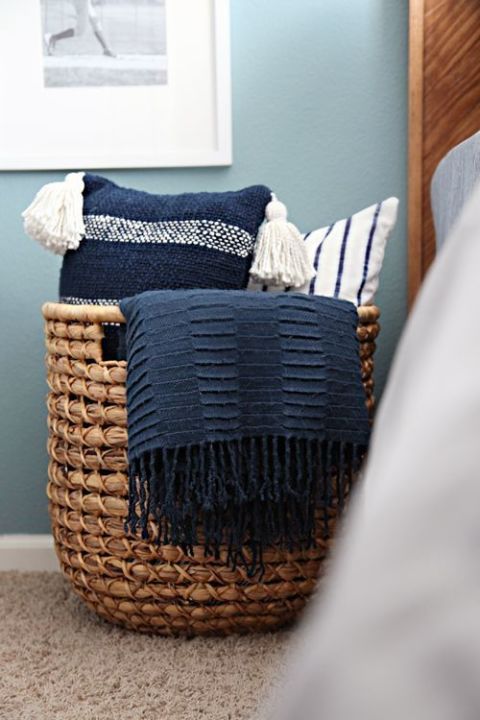
Illustration 01: A basket storage for throws and extra pillows

1. Put all your items in the place they belong
Before i started my design journey, i had a habit of putting things just anywhere where they were convinient to access or to store. For example, i had an old reading chair that i did not use so i put it in the balcony, I had my plastic teeth floss in my T.V unit as i would easily reach them from my couch and I also had my shoe rack near the bathroom which opens out to the lounge. The first step for me was to put all items where they belonged. The best thing about beggining here is when you begin to declutter by category, most things will already be in one place. You are able to know what you have in excess,what you have less and what you have just enough of.


2. Choose quality not quantity
Once everything is in the place its meant to be, now you can start discarding what you dont need. An elegant design needs good quality things. When discarding, take out anything that might be completely broken, anything that does not have its pair and anything that is completely outdated and irrelevant. For example, in this day and age, you do not need a VCR. It might be working and in good condition but not functional in this digital era. Old items such as bedsheets, towels and rugs should be taken out as well. As you declutter, take out all the excess items such as crockery and cutlery. Also discard plastics, melamine and paper crockery.


3. Schedule all your items
Put together a schedule (List) of all items that are left. To help you be able to put together your moodboard later, take photos of all items in single or in bulk and place in the schedule. The schedule should contain the space name, item name, general description, quantity and an action tab that shows if it can be replaced, re-used or repurposed. Some items may be in good condition, are new and are up to date in style but may not fit into the design style and colour that we will adopt later. Those are items that can be traded in or can be sold to be able to buy new ones that fit in the style and are to be clearly marked out on the "Replace" tab. These tabs can be left blank at this stage till after a moodboard has been generated.


Inspiration pour la journee
Tara Dennis is an Australian designer working with Better homes and gardens. She is completely incredible and gives very creative ideas for decorating and designing your house. The video below will inspire your decluttering journey.