Tuesday, 30 January 2018

2017 Colour Trend Wins

Paint colours are the most picked up and implemented trends throughout in Interior Design. From 1860s, different schemes have been adopted throughout the decade’s most running across 10 years. However from the year 2000, a regular change can be observed every year. These colours are influenced by fields such as photography, graphic and fashion design. 2017 was an experimental year with deeper colours being adopted as the main colours. Designers have moved from the greys, beige and “Greige” and have picked up dark orchid, teal and sea grass tones.
Colour psychologists have come up with theories about colour and how it influences the human senses.  Green colour for example represents freshness and balance. It alludes to wealth and growth. Blue colour represents loyalty and calmness and alludes to dependability. Purple colour represents creativity and royalty. It evokes serenity and artistry.

Other design elements implemented in smaller scales are fabric type and patterns, metals, wood tones and stone finishes.

1. SHERYN WILLIAMS ;  COLOUR OF THE YEAR – POISED TAUPE
Poised Taupe is a neutral colour with a very earthy base. It’s an effortless mix of brown and grey which makes it easy to pair. This colour is timeless and fits in both classic and modern templates. Due to its base colours, Poised taupe can be paired with a very wide variety of colours such and deep blues, purple and burgundy. Used sparingly, mustard can also pair well with taupe. For lovers of neutral schemes, off whites with cream bases will give that elegant look.


3. DULUX ;  COLOUR OF THE YEAR – DENIM DRIFT
Denim drift seems to be the colour that was adversely used in 2017.  However, the darker shade of it;  Midnight show has become more popular.  This colour works well with neutral, wood and natural stone look in bathrooms. When used with white doors and architraves, cornices and also skirtings, this colour stand out. Midnight snow can be used on kitchen cabinetry, internal and external doors and also externally at the entry porch.
 

3. BEHR ;  COLOUR OF THE YEAR – GREEN AGATE
This colour has mostly been used in Kitchen cabinetry. In a two toned kitchen, the upper cabinets can be left as white or off white while the lower cabinets as Green agate. Designers have got even more creative and used gold and brass accessories as accents. Green being a colour that aludes to freshness,  this colour has been used in bedrooms and lounge areas as the main colour.

Inspiration pour la journee
Below is a video to inspire you on other 2017 design trends as per House and Home .Also check out other articles  published by Elle Decor and House Beautiful .

Monday, 15 January 2018

New beginnings 2. Planning a redecoration

What is the difference between redesign and redecoration?
Clients have asked me this lot of times before as it is not really clear to them the difference between design and decoration.  The scope of redesign includes builders works such as demolitions and construction. It is also inclusive of any new electrical, Mechanical and plumbing works such as new wiring, drainage pipe work etc. Redesign requires and Interior designer as the main consultant and based on the extent of the new work, consultation from Mechanical, electrical and structural engineers may be required. Redecoration on the other hand is purely the change of aesthetic elements in the house such as finishes (Floor, wall and ceiling), electrical and mechanical fittings/ accessories and change/refurbishment of furniture. In redecoration, there is no builders work involved and therefore, only services of an Interior designer or Interior decorator are involved. 
How should one plan for a redecoration?
There are three main things one should do before embarking on a redecoration.

  1.   Research and establish a style
  2.  Prepare a moodboard
  3.  Prepare a schedule


1)      Research and establish a style
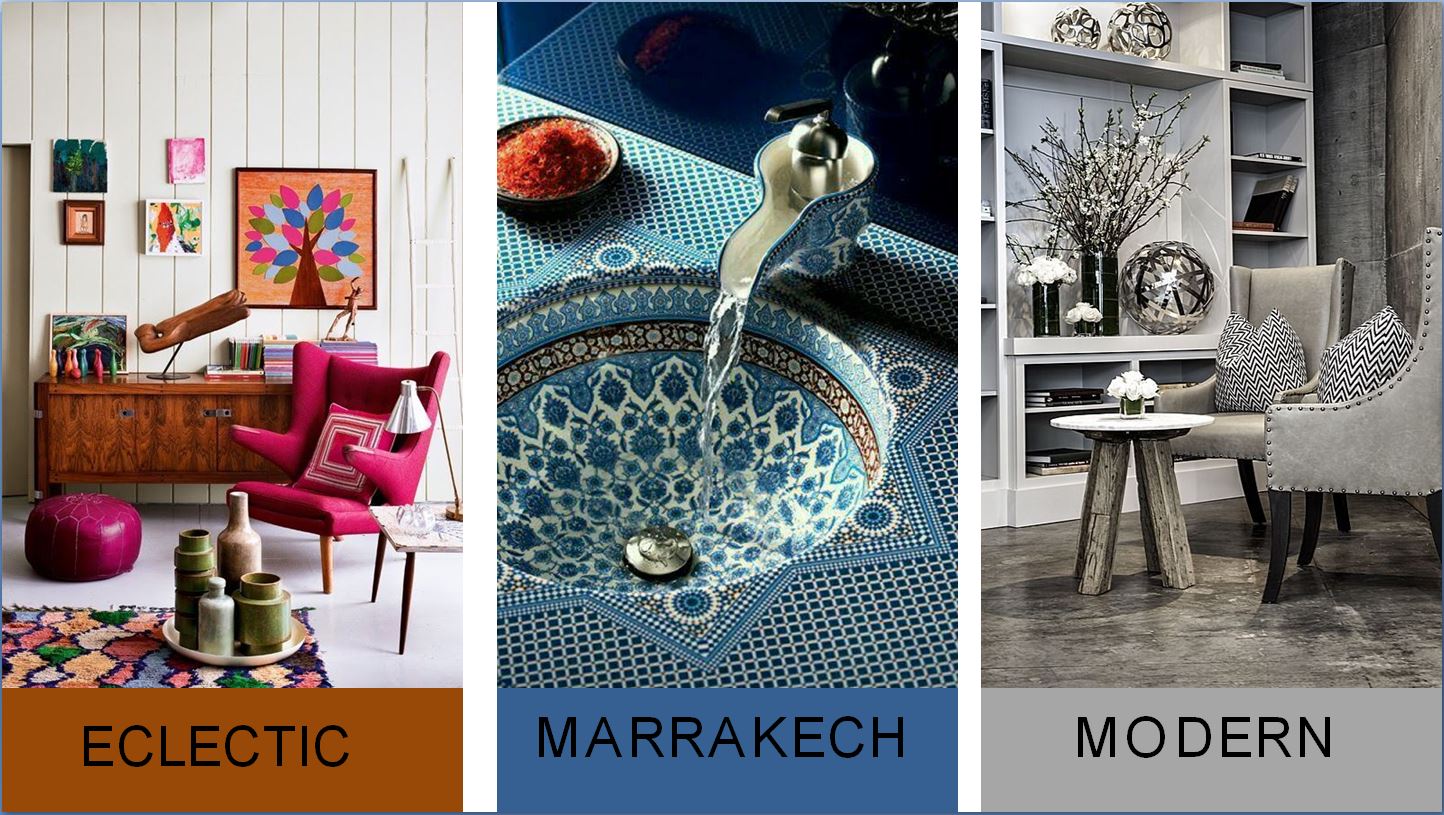
There are very many different types of styles one can adopt in Interior design. Each style has its own properties and characteristics. The difference between the styles mostly falls in the colour palette, types of fabrics, pattern and prints, furniture styles, lighting and sanitary elements and accessories, rugs type and pattern styles and sometimes furniture arrangement. Lots of these styles have been outlined in https://www.houzz.com/ a really good source for design inspiration and in other platforms on the internet. However, these are not all styles available. Styles such as Minimalist, Japandi, Bohemian, Traditional African, African chic, Swahili , Marrakech, Nautical, etc have not been captured on Houzz but have been captured on other platforms online.  Before one begins a redecoration, one needs to research and establish the type of style they would like to adopt and also the elements they need to incorporate to achieve this style. 

2)      Prepare a moodboard
Mood boards can be physical or digital. In this day and era, digital mood boards are the best as one can be able to add or delete elements easily from the page. There are many software’s one can use to create this. However, the easiest software is Microsoft PowerPoint. PowerPoint is easy to use and is easy to add images and texts. Mood boards help one visualize the room with all elements on one page including fabrics and colour palette. If for example one has come across a beautiful sofa in the showroom or in a magazine, one should take a photo and paste it in the mood board. Many shops now have also digitized their products and one can get clear photos on their websites.

3)      Prepare a schedule
Schedule preparation is the most exhausting part of the process as one is required to accurately put in the Description, Source, Dimensions, Quantity, Cost per item and the total cost. An image is also required for easy identification. This needs to be accurate as possible because it helps one generate a preliminary budget.  Quantities of items such as drapery may be a bit difficult to calculate and therefore one can use fabric calculator for this. Once this is complete, one can then approach the different suppliers and request for a quotation of the actual items. It is necessary to ask the supplier to include taxes, lead time, extra charges such as transport, payment terms, validity period of that quotation and of course the discount. 

Want inspiration on redecorating your home?


Follow Design cafe on Instagram
Keep reading to get information on the different styles of design. We have published Victorian Style and  Traditional Style

Monday, 8 January 2018

New Beginnings 1. Planning a remodel

The beginning of a new year is always very exciting. It’s a time when people think about all the possibilities with the fresh new start. People get an opportunity to plan for the new year.  A home is a very important element in everyone’s life. Every day, each one of us spends some time in the house. In a day, we generally spend between 6-14 hours with even more time spent during the weekend. Therefore, one needs to think about how to not only have a house, but to make the house a home.
Re-modelling is a good way to intentionally convert spaces that were not working optimally to more functional spaces. Before one plans on the type of remodel, one needs to set up the budget for the works. Once this is established, one can then choose the type of remodel they would like to do. There are three types of remodel: 
  1. Minor remodel with Major redecoration
  2. 50/50 remodel and redecoration 
  3.  Major remodel
One also needs to establish areas to prioritize that either will generally improve the day today function of the home or will largely optimize the use of the space. 
 1. Minor remodel with Major redecoration
Minor remodel includes addition of smaller items that are inexpensive, are smaller in size and can be DIYs. These items can be bought pre-cut or finished and all we have to do is installation. One minor remodel that makes a very big difference is installation of storage shelves. Storage is important in almost every room. It helps to keep the room clean but mostly organized.  Shelves are easy to install and can be bought finished. General repair works such as fixing broken cabinets, leaking mixers and broken down door lock or handles is also an easy way to improve the home. Once these items are fixed, a whole fresh new coat of paint brings life to the space. The choice of colours is important because it can either bring glam or make the space dead.
 2.50/50 remodel and redecoration
In this type of remodel, it is necessary to chose rooms that require more attention than others and those that will make a total difference to the house. The kitchen, bathroom and laundry room/area are the most important. Cooking and cleaning which is done most of the time is done in these rooms. Due to their heavy use, these rooms require constant attention in cleaning. Therefore, this rooms need to be functional, easy to use and maintain. Partial re-decoration can also be done to the other rooms to give them a new sense of “fresh”.
3. Major remodel
A major remodel can be an expensive affair. This type of remodel includes a complete change of floor, wall and ceiling finishes. It also included demolitions to open up spaces or reconfiguration of space layouts. A major remodel will require services of an interior designer and a good contractor/builder.  This is because, there may be interference with electrical and plumbing systems and will need a whole new planning.  This type of remodel also takes time both planning and implementation and may require one to completely move out of the house for it to be done.  It is necessary to do this type of remodel at least every 15-20 years because the use of the different spaces in the house may have changed. The users themselves will also have changed in age and therefore will require different needs. 
P.S Tips on remodeling.
Check out ideas from Better Homes and gardens on remodeling on the link http://www.bhg.com/home-improvement/advice/creative-remodeling-ideas/  
Check-out my next post on “Planning a redecoration” to give you insight on how to improve a home significantly by change of FF&E (Furniture fittings and equipment).

Tuesday, 19 December 2017

Decorating for the holidays!

The Christmas season is a highly celebrated time of the year globally. The Christmas tradition began as a religious celebration where Christians celebrated the birth of Jesus. This is highly significant due to  its meaning and representation to the Christian faith. However, the Christmas season celebrations are experienced by everybody in the world, both Christians and non- Christians. During this season, people go all out in decorating their homes, malls put up Christmas trees and lights and many businesses include these decorations as part of their holiday celebrations. This tradition has been passed on for many years. Decorating the home for Christmas is very exciting, both for singles and for familys with kids. The choice of Christmas decorations should be able to fit into the current style of the home.
  
What type of decoration styles are there?  
There are many types of decorations that can go with different styles of the home. These decorations generally fit into any style, however for homes with very vibrant colour schemes, all white or rustic decorations always look better.  

 a) All white décor
All white décor is beautiful and elegant. This is the best décor to put up if you don’t like too much colour. This type of décor is simple, neutral and can be easily achieved.  White décor makes a home bright and airy. White as a colour is a symbol of peace and tranquility. White gloves, cotton balls an paper cut snowflakes can be used to decorate the Christmas tree or the fireplace mantle. Gold or silver accents can be added to bring a shimmer to the look. This is the look that Melania Trump has chosen for the 2017 White House chrismas scheme. 

b) Red and green Christmas décor
The red colour in Christmas décor symbolizes the blood of Jesus which was shed during his crucifixion.
The green colour symbolizes eternal life and is picked up from the evergreen tree which does not lose its leaves over winter. This tree has naturally been adopted as the Christmas tree all round the world.  Red and green décor bring colour to the celebrations and generally “pop” in neutral scheme homes.
 
c) Rustic décor  
Lovers of the Craftsman and Farmhouse design styles can rest easy as rustic décor perfectly fits in their interior design style. The rustic décor incorporates natural textures in décor pieces with no pop of colour. Natural wood tones can also be incorporated in the Christmas décor. Brown book cover paper and sisal fabric can be cleverly used to wrap gifts, make Christmas tree ornaments and also be used as dining table placemats and napkin holders.

d) Nature inspired décor
Use of natural plants as Christmas décor is highly appreciated by environmentalist. Christmas season can have a huge environmental impact due to the greenhouse gases emitted from production of Christmas decorations. Use of natural decorations such as branches , twigs and natural plants can have a reduced impact environmentally as these décor pieces are used over a short period of time. Disposal is made easy as natural plants naturally and easuly decompose. 

How about becoming environmental friendly this Christmas?
Re-cycling is a good way to save money and reduce waste this Christmas season. Old newspapers, cardboard boxes and bottletops are waste materials that can be used to make christmas decorations. Watch video below for more inspiration. 

Monday, 6 November 2017

Step 01 - Declutter, Declutter, Declutter!!

Many designers always say that the first step to design is to create a moodboard. Well, i tend to disagree. I think that the first step is to Declutter! Elegant design is minimal. Many of our homes are filled with items that have been purchased randomly without following a certain type of style. We have items made of all sort of materials especially plastic and melamine. These items also have all types of colour and patterns. Good design is intentional and planned. With design, every detail has to be well thought out including buttons, knobs and dusting flannels. Design can be "expensive" and therefore has to be well planned to be done in stages. A complete re-design is done over a period of time. There are many ways of beginning the declutter process.


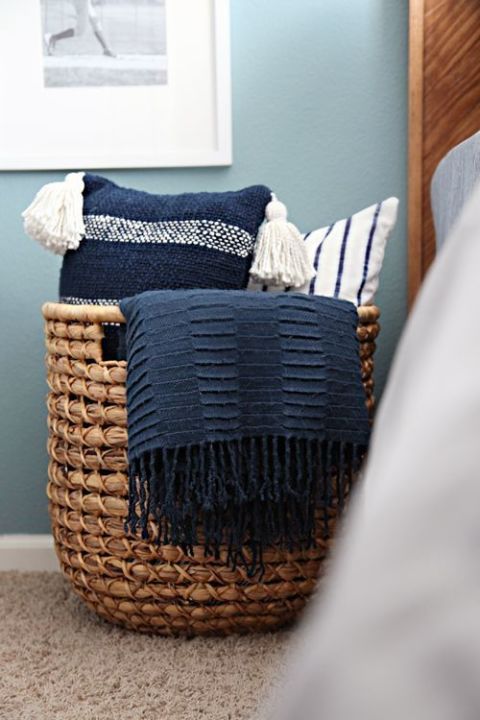
Illustration 01: A basket storage for throws and extra pillows

1. Put all your items in the place they belong
Before i started my design journey, i had a habit of putting things just anywhere where they were convinient to access or to store. For example, i had an old reading chair that i did not use so i put it in the balcony, I had my plastic teeth floss in my T.V unit as i would easily reach them from my couch and I also had my shoe rack near the bathroom which opens out to the lounge. The first step for me was to put all items where they belonged. The best thing about beggining here is when you begin to declutter by category, most things will already be in one place. You are able to know what you have in excess,what you have less and what you have just enough of.


2. Choose quality not quantity
Once everything is in the place its meant to be, now you can start discarding what you dont need. An elegant design needs good quality things. When discarding, take out anything that might be completely broken, anything that does not have its pair and anything that is completely outdated and irrelevant. For example, in this day and age, you do not need a VCR. It might be working and in good condition but not functional in this digital era. Old items such as bedsheets, towels and rugs should be taken out as well. As you declutter, take out all the excess items such as crockery and cutlery. Also discard plastics, melamine and paper crockery.


3. Schedule all your items
Put together a schedule (List) of all items that are left. To help you be able to put together your moodboard later, take photos of all items in single or in bulk and place in the schedule. The schedule should contain the space name, item name, general description, quantity and an action tab that shows if it can be replaced, re-used or repurposed. Some items may be in good condition, are new and are up to date in style but may not fit into the design style and colour that we will adopt later. Those are items that can be traded in or can be sold to be able to buy new ones that fit in the style and are to be clearly marked out on the "Replace" tab. These tabs can be left blank at this stage till after a moodboard has been generated.


Inspiration pour la journee
Tara Dennis is an Australian designer working with Better homes and gardens. She is completely incredible and gives very creative ideas for decorating and designing your house. The video below will inspire your decluttering journey.

Wednesday, 1 November 2017

Understanding styles 02) Traditional

Traditional interior design reflects classic European decor. Trademarks of this style generally include deep wood tones, architectural details, and elegant furnishings. This style is quite versatile and can be combined with other interior elements to create a unique look in a room. One of the most important facets of traditional interior design is the silhouettes, also called the lines, of the furnishings. Wing-backed chairs, claw footed tables, and curved furniture pieces that reflect the 18th and 19th centuries are examples of this. Common models for such traditional furniture are pieces attributed to the Queen Anne or Chippendale styles. Antiques are also often integrated into this design style. Although elegant, traditional interior design often also emphasizes simplicity and comfort in its layout. Pairings of furniture and accessories are common in this design scheme. This is often done to create a sense of symmetry around a focal point, such as a favorite work of art, a fireplace, or a large piece of furniture.

 Image i. A piano in a traditional lounge area
 
Color: Walls are typically painted neutral colors to visually ground the elaborate furnishings. While such colors may also be used for large upholstered pieces, most furniture in this type of room incorporates rich shades of colors like red, blue, and brown. Artwork and accessories often incorporate more vibrant colors in a traditionally designed room.
 

Fabrics: Fabrics often come in solid colors, but many also feature patterns such as florals, damasks, or paisleys. These textiles are often expensive materials like silk, velvet, or cashmere. This style is considered by many designers to be flexible enough to also incorporate more affordable and easy to care for fabrics, such as cotton or linen. Accents, like throw pillows, may then be used to incorporate the more costly textiles.
 

Wood: Rich tones are another key element in traditional interior design. Dark woods like cherry, maple, and mahogany are typically used in furniture pieces of this style. These are often carved and lacquered to give them a luxurious, elegant feel. Wood floors are also considered a standard for this decor, although tile and carpet are often used as well.
 

Accents: Architectural embellishments are widely used in this type of interior design. These can include elaborate moldings, beveled wood paneling, and intricate tile and wood floor patterns. Arches, columns, and built-in cabinetry are also frequent features of this type of design.

Inspiration pour la journee
Traditional design happens to be my best style. I love the level of detail in the fabric patterns, curvings and even wall paper. 
Designer Christine Elliot of Christine Elliot Interior design ellaborates how to make a small house feel more refined and bespoke by use of traditional and elegant details. Wach Video below.


Thursday, 19 October 2017

Colour through the decades : 40,000BP - 1800's

The art of painting began back in the pre-historic era about 40,000 years ago. Human beings are known to have painted their surrounding  i.e their caves for purposes of aesthetics and communicatioin. Paint was generally made out of local elements found naturally such as coloured earth and soot. These were mixed with organic materials such as animal blood and fatty oils to form a liquid compound. The paints therefore comprised of earth tones which leaned towards black when mixed with soot and redish when mixed with blood.

 Illustration 01: Hand stencils estimated between 35,000-40,000 BP

 Colour palette generated from prehistoric art
Application
Brown palettes sometimes refered to as earthtones became a trend in 2015 interior design. The palette included extensive use of ivory, terra cotta and dark brown. This colours can be used with both light and dark woods.  The palette brings a feeling of warmth and calm to a space. 


2000 years ago, painting became common practice. The Egyptians invented their own paint made by mixing oil or fat with lead, earth, animal blood, ground glass or semiprecious stones in an industrial process. Use of grass introduced a green tone to the palette. Their palette mainly consisted of red, blue and yellow which we now refer to as primary colours. Other paint colours that they invented were white, black and green (made by mixing blue and yellow). These paint colours together with furnishings were adversly used in the living spaces of the pharaohs. 

Illustration 02: The Funerary - Ancient Egyptian art

 Colour palette generated from Egyptian art
Application
Heritage colours are bright and colourful and comprise of blues, greens and browns. In the modern day application, sash green makes the perfect tone that is contemporary and calm. This colour can be paired with accents of yellow and sand.

 PS
 Accessorising the Egyptian look and feel can be fun!! Emeralds and gold make the perfect combination.


Monday, 9 October 2017

The Tiny House

The tiny house movement is an architectural and social movement advocating for simple living. It began around 2002 when the cost of living had completely skyrocketed making people drown in debt trying to pay off mortgage loans. This had led people to live hand to mouth and work for up to 20 years paying 1/3 to 1/2 of their salary inorder to pay out debt. Previously, the idea of the bigger the house, the wealthier you seemed was highly celebrated. This was part of consumerism that encouraged aquisition of more to be more economically desirable.

Does the idea of having a bigger space warrant happiness and comfort? I dont think so.

The bigger the house, the more expensive the cost of purchase or the more expensive the cost of rent.  This leads to the need to have more things in order to fill up the space. This further leads to a higher maitanance cost and so on. 

How can we counter this? by simple living.


a) A simple lounge area

Simple to some degree can mean minimal. The essential elements in a lounge area are a seat/couch, a table/ stool and a source of entertainment e.g a T.V, sound system, book cabinet, Tablet/notebook/laptop etc. Decor pieces only improve the the look and feel of a space but are really not functional. Carefully measure the size of your space and purchase furniture that fits. Modern light form furniture may be a good option as it makes the house feel light. Having less reduces clutter and hence providing more space. An addition of an element like a house plant brings life into the lounge area. In a tiny house, options such as an inbuilt counter on the couch can reduce the need for a table.  

b) A simple bedroom


 The essentials of a bedroom are purely the bed, a bedside table, a dresser and a wardrobe. The size of bed should be dependent on the size of space. Closed cabinet furniture are always advisable in the bedroom. The reason for this is because most of the time, we do not get time to clean up after especially in the morning when we are on our way out. Closed cabinets are forgiving as one can throw everything in and quickly keep the bedroom neat. In a tiny house, storage drawers can be provided under the bed reducing the need for a wardrobe. A bedside table can also double up as storage for oils and perfure reducing the need for a dresser. 

c) A simple bathroom  


A functional bathroom requires a wash hand basin, a W.C and a shower element i.e head,arm or both all with running water. A separate spout is usefull in the bathroom as sometimes acts as the main water source when cleaning especially in a house without a laundry area. The bathroom needs to be kept simple to make it easy to clean and walk around in a tiny house.

As i was reading more about the tiny house, i came across Ana whites video on open concept modern tiny house and i thought it was brilliant. Watch the video below.


Tips learnt from Ana white :

1. Make use of vertical space.

2. Make items that can be folded away or tucked away when not in use.
3. Use furniture that is multi-use.

Monday, 2 October 2017

The Magic of plants.

When i was younger, i enjoyed planting flowers and trees with my dad as it was one of my favourite bonding time. I did it all for the fun of it. Slowly, i began loving the transformation that was brought by the new trees in our compound. I loved the look of the different colours and types of flowers, the shading by the mature trees and the general fresh air brought by all the plants. Both indoor and outdoor plants have a positive influence on the general appeal of a place. If well selected, plants and flowers can drastically change the feel of a space.

 Diag 01: Indoor potted plants


How can i use plants to improve the ambience of my home?

a) The Bathroom

Earth, water and plants are elements that have been known to bring life into a space. Being a wet area, the bathroom mostly has tile as a finish in most walls if not all due to the practicality of cleaning and resistance to moisture. Tiles make a bathroom feel "hard". A bathroom is intended to be a calm area where one feels relaxed . Adequate lighting and space are necessary for a functional bathroom. Addition of a plant completes the space, makes it soft and dependent on the type of plant or flower, provides a sweet smelling fragrance.


b) The Kitchen

The kitchen is always reffered to the heart of the home. The reason for this is because, this is where the meals in the home are prepared. At every given time, the mums are always in the kitchen preparing the main meals, snack for the kids, bitings when hosting or even cleaning up after. With all the time they spend here, the kitchen needs to have fresh clean air, a stress reducing ambience and a nature connecting element. How else to do this other than to bring in plants and flowers.


c) The front porch

The entrance is the face of the home. How a home looks at the entrance determines so much what is to be expected on the inside. An entrance is as important as the entryway. Plants are a great way to improve the entrance of a home. Not only do they provide a perfect decor, they also provide a lifetime supply of flowers. The choice of the plants or flowers may be dependent on the general design scheme,  the size of plant and planters one would want, the ease of maintainance or even the types available within the area.
 

PS
Have you thought about using edible plants as opposed to flower budding plants? Keep checking for my post on Edible gardens to be published soon.